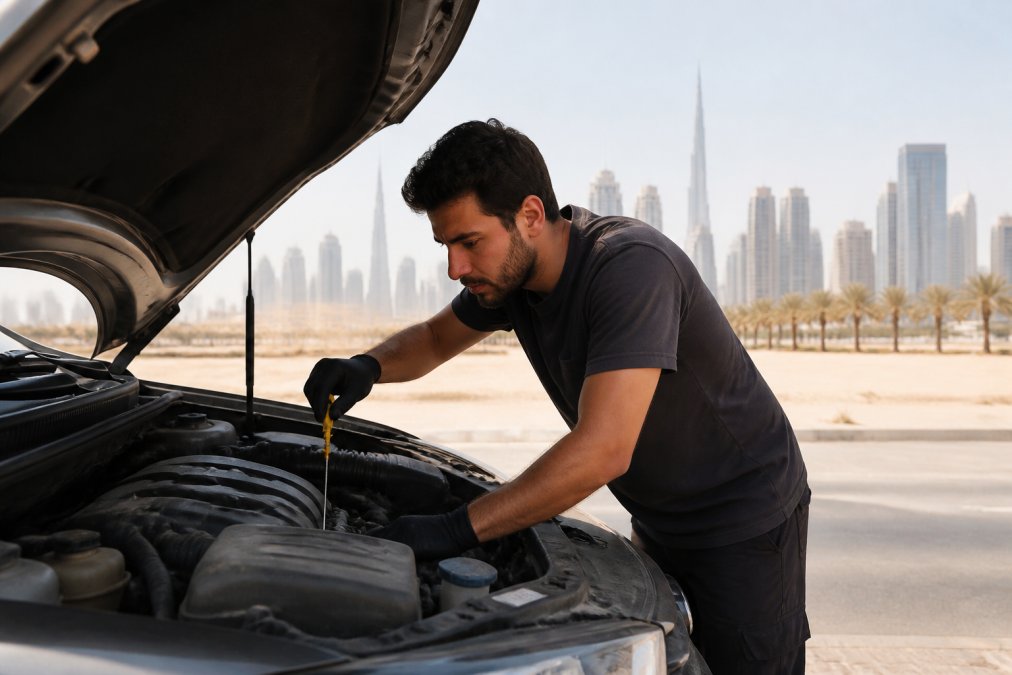
 ultimate-guide
Car Maintenance Tips for Dubai Summer Heat: 2026 Guide
Table of Contents
- Why Dubai Summer Heat Puts Your Car Under Real Strain
- Car AC Repair Dubai: When Cooling Fails and What to Do
- Signs of Overheating Engine: What to Watch on the Dashboard
- Tire Pressure for Dubai Summer: Why Heat Changes the Numbers
- Battery, Oil and Coolant: The Under-the-Bonnet Checks That Matter
- How to Find a Reliable Garage in Dubai Without Wasting a Weekend
- Your Summer Maintenance Checklist Before the Heat Peaks
- Conclusion
- Frequently Asked Questions
Last Updated: September 10, 2026
Why Dubai Summer Heat Puts Your Car Under Real Strain
Dubai summer heat is not just uncomfortable for drivers; it is genuinely hostile to every system inside your car, which is why car maintenance tips for Dubai summer heat matter so much. Car maintenance tips for Dubai summer heat start with understanding one number: ambient temperatures regularly push past 45°C, and the interior of a parked car can climb far higher, cooking rubber, fluids and electronics that were designed for milder climates. This guide covers the checks that actually matter between May and September.
Here is what most guides get wrong: they treat summer as one long season of identical advice. In reality, the failure points shift as the heat builds. Early summer punishes your battery and tyres. Peak summer attacks your cooling system and air conditioning. Late summer exposes every hose and belt that has been quietly degrading since June.
The good news is that almost all of it is preventable with a handful of checks you can do in a car park in under twenty minutes.
Car AC Repair Dubai: When Cooling Fails and What to Do
Car AC repair in Dubai is one of the most common summer jobs at any workshop, and the reason is simple: an AC system that works perfectly in March can struggle by July. The compressor has to work harder as cabin temperatures rise, refrigerant pressures climb, and a small leak that was invisible in cooler months suddenly matters.
If your AC is blowing warm, making grinding noises, or taking more than a few minutes to cool the cabin, get it inspected before the peak heat arrives. Waiting usually turns a recharge into a compressor replacement, which is a far bigger job.
UAE Ministry of Energy and Infrastructure vehicle safety guidance
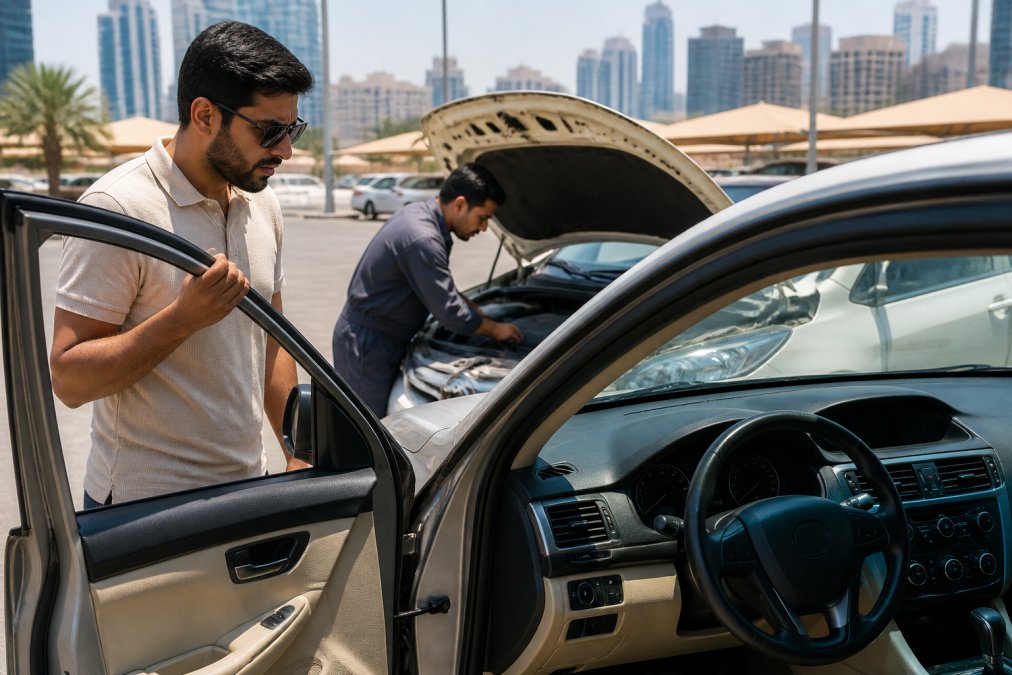
Warning Signs Your AC Is About to Give Up
Watch for these before they become expensive:
- Weak airflow from the vents even on maximum fan
- A musty or chemical smell when the AC first starts
- The cabin cools only while you are driving, then warms at idle
- Visible refrigerant oil residue around AC lines or fittings
- The compressor clutch clicking on and off rapidly
A common mistake is topping up refrigerant without finding the leak first. It buys you a few weeks and then fails again.
Signs of Overheating Engine: What to Watch on the Dashboard
Signs of an overheating engine almost always appear on the dashboard before they appear under the bonnet, which gives you time to act if you are paying attention. The temperature gauge creeping above its normal resting point is the clearest signal. In Dubai traffic, this is where most overheating incidents begin, because idling in 45°C heat with the AC running is the hardest possible test for a cooling system.
Other early warnings include a sweet smell from the engine bay, coolant pooling under the car, and the AC cutting out when the engine gets hot. That last one is a deliberate protection mechanism in many cars.
What to Do If the Temperature Gauge Climbs
Pull over safely and switch off the engine. Do not open the coolant cap while the engine is hot; pressurised coolant can cause serious burns (nhtsa.gov). Let the car cool for at least thirty minutes, then check the coolant level and look for visible leaks. If the level is low and you have coolant on hand, top it up and drive gently to the nearest workshop. If the gauge climbs again within minutes, stop and arrange a tow.
Tire Pressure for Dubai Summer: Why Heat Changes the Numbers
Tire pressure for Dubai summer needs checking more often than most drivers realise, because every 10°C rise in ambient temperature can raise tyre pressure by roughly 1 PSI. A tyre correctly inflated at 32 PSI on a cool morning can read several PSI higher by mid-afternoon, and the opposite happens overnight.
Under-inflated tyres are the bigger danger (nhtsa.gov). They flex more, generate more internal heat, and are far more likely to fail at highway speed on a hot road surface. Check pressures when the tyres are cold, ideally first thing in the morning, and follow the placard inside your driver's door rather than the maximum printed on the tyre sidewall.
| Check | When to Do It | Why It Matters in Summer |
|---|---|---|
| Tyre pressure | Weekly, tyres cold | Prevents blowouts and uneven wear |
| Tyre tread depth | Monthly | Heat reduces grip on worn tyres |
| Spare tyre pressure | Monthly | A flat spare is useless in an emergency |
| Valve caps | Monthly | Missing caps let in dust and cause slow leaks |
Battery, Oil and Coolant: The Under-the-Bonnet Checks That Matter
Battery, oil and coolant are the three fluids and components that decide whether your car survives summer without a breakdown. Heat is harder on a battery than cold, because it accelerates internal corrosion and evaporates electrolyte faster. A battery that is two or three years old is a genuine risk in peak summer.
Oil thins as temperatures rise, so a tired or low-grade oil stops protecting the engine properly. Coolant does the opposite job: it needs the correct concentration to raise the boiling point and keep the system from overheating.
- Check battery terminals for white or green corrosion and clean them if present
- Check engine oil level weekly and top up with the grade your manual specifies
- Check coolant level only when the engine is cold, and top up with the correct mix
- Inspect belts and hoses for cracks, glazing or soft spots
How to Find a Reliable Garage in Dubai Without Wasting a Weekend
Finding a reliable garage in Dubai comes down to comparing quotes for the same job, not picking the first workshop you find. The difference between garages on the same repair can be substantial, and the cheapest quote is not always the one that saves you money.
When you ask for a quote, be specific. State your car's make, model and year, describe the symptom clearly, and ask whether the price includes parts, labour and VAT. A garage that will not put a figure in writing before starting work is a garage to avoid.
- Ask for the quote in writing before any work begins
- Confirm whether parts are original or aftermarket
- Ask what happens if the diagnosis changes mid-job
- Check whether the workshop offers any warranty on the repair
This is where Xoomi helps. Instead of calling five garages and repeating yourself each time, you can compare garage quotes in Dubai for the same job side by side, see which workshop fits your budget, and book with confidence. If you have been using the same mechanic for years, there is no harm in getting a second quote for comparison; you may find your current garage is already competitive, or you may find you have been overpaying. Xoomi helps you compare garage quotes in Dubai for the same job side by side, see which workshop fits your budget, and book with confidence.
Your Summer Maintenance Checklist Before the Heat Peaks
Work through this before the first 45°C week, and you will avoid most of the breakdowns that fill workshops every July and August.
- Test the battery and replace it if it is over three years old
- Have the AC inspected, leak-tested and recharged if needed
- Check coolant level and concentration when the engine is cold
- Check engine oil level and top up with the correct grade
- Check tyre pressures and tread depth, including the spare
- Inspect belts and hoses for cracks or softness
- Test the temperature gauge and warning lights work correctly
- Keep a basic kit in the boot: coolant, oil, a tyre gauge and a reflective triangle
Conclusion
Dubai summer will find every weak point in your car, whether it is a tired battery, a slow refrigerant leak or a tyre that is quietly losing pressure. The drivers who get through the season without a breakdown are the ones who check these things in May rather than waiting for a warning light in August.
Xoomi makes that easier by letting you compare garage quotes for AC repairs, battery replacements, diagnostics and routine oil changes in one place, so you can find a workshop near you and choose the one that fits your needs and budget. Get started with Xoomi and walk into summer with your car properly prepared.
Frequently Asked Questions
How does extreme heat in Dubai affect car batteries?
High temperatures speed up the chemical reactions inside a lead-acid battery, which increases water loss and corrosion on the plates. A battery that lasts four to five years in a cooler climate may only manage two to three summers here. Get yours load-tested before June. Warning signs include slow cranking, dim headlights at idle and a sulphur smell under the bonnet.
What are the signs of AC failure in Dubai's summer?
Watch for air that feels cool at first then turns warm within minutes, weak airflow from the vents, a musty smell, or the compressor cycling on and off rapidly. A refrigerant leak or a failing compressor clutch are the usual causes. If cooling drops noticeably during afternoon drives, book a car AC repair Dubai service before the fault damages the compressor.
How often should I check my tire pressure during Dubai summer?
Check it every two weeks, and always in the early morning before the car has been driven. Tyre pressure for Dubai summer matters because road surface temperatures can push internal pressure up by 10 to 15 percent above your cold reading. Follow the placard on your driver's door sill, not the maximum figure printed on the sidewall.
What should I check before taking my car to a garage in Dubai?
Note the exact symptoms, when they appear (cold start, after 30 minutes of driving, only with AC on) and any warning lights. Check your coolant, oil and tyre pressures first so you can rule out simple causes. Having this written down makes it easier to compare quotes fairly and reduces the chance of a workshop suggesting work your car does not need.
How does high temperature impact engine oil performance?
Heat thins engine oil, so a grade that worked in winter may not hold its film strength in 45C traffic. That is why many manufacturers specify a heavier hot-viscosity grade for this region. Oil also oxidises faster, so stick to the interval in your service book or shorten it if you do a lot of short stop-start trips.
Is it necessary to use a sunshade for my car in Dubai?
It helps more than most people expect. A windscreen sunshade can drop cabin temperature noticeably and protects the dashboard, steering wheel and infotainment screen from UV cracking. Pair it with window tinting that meets local rules and park in shade where possible. Your AC then has less work to do on the first ten minutes of every drive.
How do I find a reliable garage in Dubai without overpaying?
Ask for an itemised quote covering parts and labour, confirm whether the workshop uses genuine or OEM-equivalent parts, and check what warranty they offer on the work. Comparing several quotes for the same described job is the fastest way to spot an outlier. A platform that lets you compare garage quotes side by side removes most of the guesswork.
Can I service my car myself during summer to save money?
You can handle tyre pressure, wiper blades, coolant top-ups and battery terminal cleaning yourself. Leave refrigerant work, brake fluid flushes and anything involving the AC compressor to a workshop, since those need recovery equipment and refrigerant handling that is not practical at home. Doing the simple checks yourself keeps costs down and helps you spot problems earlier.